The restaurant industry has always been driven by experience — but in 2026, the definition of "experience" has shifted. It's no longer just about the food, the service, and the ambience. It's about personalisation, anticipation, and the feeling that a restaurant genuinely knows and cares about the guest in front of them.
For independent restaurants competing against chains with larger marketing budgets and loyalty programmes built by entire teams, this is both a challenge and an advantage. Chains are slow to personalise at the individual level. Independents can be remarkably fast — if they have the right data and the right habits.
What Diners Are Actually Expecting in 2026
Research from SevenRooms' 2025/26 UK hospitality survey captures the shift clearly:
- 72% of UK diners have returned to or are planning to return to a restaurant specifically because of a personalised experience they received there
- 41% of consumers prefer to connect with restaurants via text message rather than email
- 89% of consumers are open to signing up for a restaurant's marketing communications if the incentive is relevant
- Experiences over transactions: a growing segment of diners (especially under 35) report spending more on a restaurant experience when they feel recognised as an individual
The implication for independent restaurants is clear: remembering who your guests are — not just their booking details, but their preferences, occasions, and history — is now a competitive differentiator.
Trend 1: Experience-Led Dining and Paid Upgrades
One of the most significant monetisation shifts in UK restaurants in 2025–26 has been the uptake of premium experience add-ons. Restaurants are moving beyond the transactional table booking and offering:
- Window seat or premium location fees — charged at the point of booking
- Chef's table experiences at a fixed price per head
- Pre-arranged menus and pre-orders for special occasion groups
- Wine pairing upgrades selected during the booking flow
Darwin Brasserie in London reported a 626% increase in digital sales within two months of introducing upgradeable seating through their booking system. That number is exceptional, but the direction is consistent across the industry.
For independent restaurants, this doesn't require a sophisticated upgrade product. A simple question at the point of booking — "Would you like us to arrange a complimentary pre-dessert for your anniversary?" or "Can we prepare a specific table location for you?" — begins the experience before the guest walks through the door.
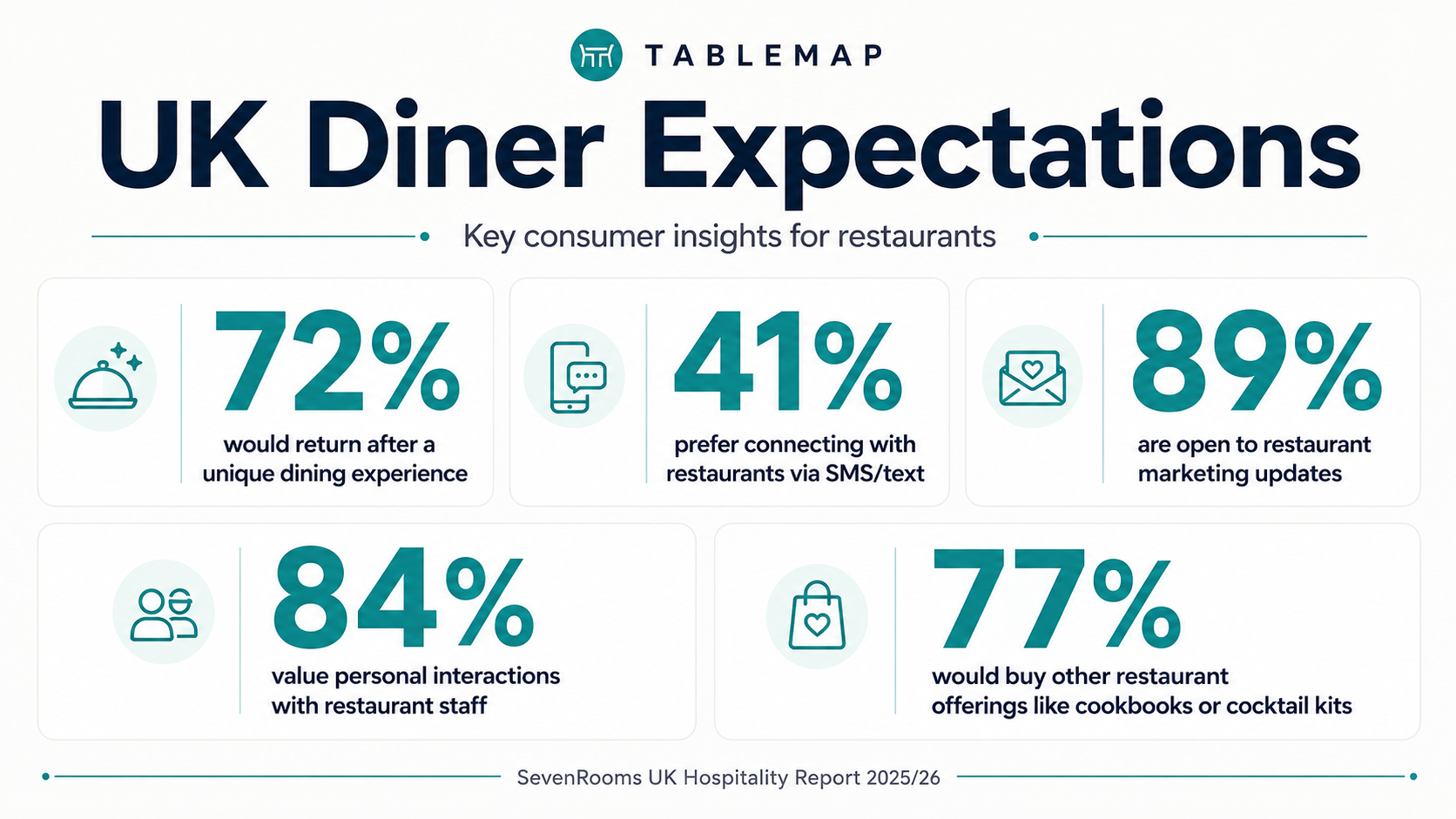
A visual data summary with 4-5 key statistics from the diner expectations section. Use large numbers (72%, 41%, 89%) with brief explainer text. Clean, bold typography. Tablemap brand colours. Include small source credit at bottom: 'SevenRooms UK Hospitality Report 2025/26'.
Trend 2: Pre-Arrival Personalisation
The most underutilised window in the guest experience is the 24–48 hours before a visit. Most restaurants use this time only to send a reminder. The best restaurants use it to build anticipation.
Pre-arrival personalisation looks like:
- A message acknowledging the occasion: "We can't wait to celebrate your birthday with you this Saturday"
- A brief prompt about the evening: "We have a seasonal menu change tonight — here's a preview"
- A practical note: "Parking is on the high street or the NCP behind us — both about a 3-minute walk"
- A pre-order prompt for dietary needs or the chef's selection
None of this is logistically complex. It requires guest data from the booking and an automated message system that personalises based on that data.
Trend 3: Post-Visit Recovery and the Second Visit
The critical moment that most restaurants miss is the 2–3 hour window after a completed visit. This is when:
- Guests are most likely to leave a review (the experience is still fresh)
- A personalised thank-you feels genuine rather than automated
- A soft prompt to return — with a specific reason (new menu, upcoming event) — converts at its highest rate
A follow-up that references the specific visit ("We hope the birthday dinner was everything you hoped for") outperforms a generic thank-you by a significant margin. The data from operators running personalised follow-up sequences consistently shows a 15–25% uplift in repeat visits within 90 days.
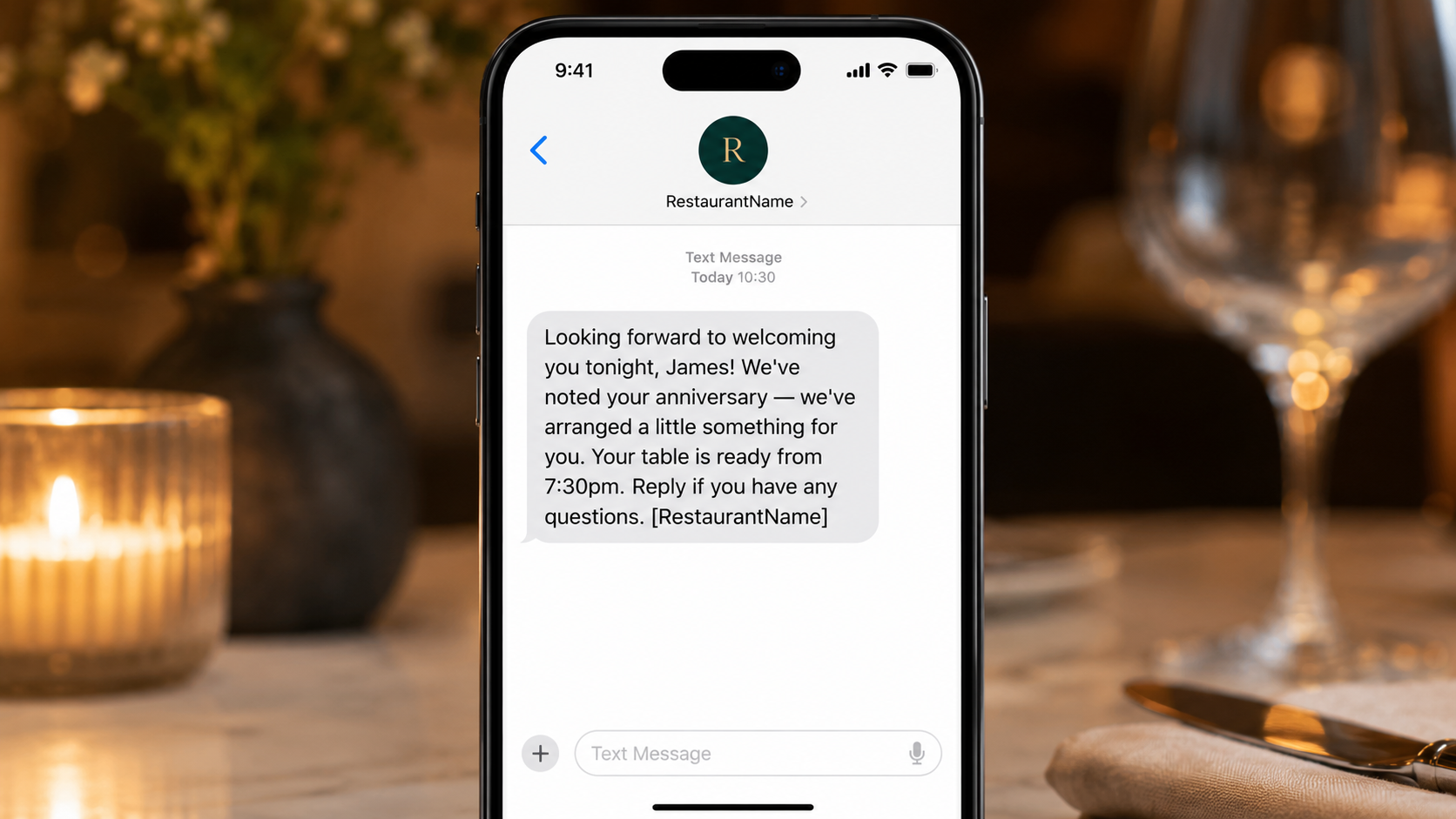
A clean smartphone mockup showing a pre-arrival SMS:
"Looking forward to welcoming you tonight, James! We've noted your anniversary — we've arranged a little something for you. Your table is ready from 7:30pm. Reply if you have any questions. [RestaurantName]"
Clean, warm, simple. The message should feel personal without feeling intrusive.
What This Means for Your Operations
Implementing these trends doesn't require a CRM team or a complex tech stack. It requires:
- Capturing the right data at booking — occasion, dietary requirements, guest name, previous visits
- Training front-of-house staff to use guest notes before each service
- Automating the follow-up so it happens consistently without manual effort
- Building pre-arrival personalisation into your message templates
The gap between independent restaurants that do this and those that don't will widen in 2026. Guests who feel recognised return more often. Guests who feel like a number go somewhere else.
How Tablemap Supports This
Tablemap's guest profiles capture booking history, occasion data, and special notes. Automated pre-visit and post-visit messages are personalised based on this data — no manual effort required per guest.