SMS has one of the highest open rates of any communication channel — consistently cited at 90%+, with the majority read within 3 minutes of receipt. Yet most independent restaurants either don't use it at all, or limit it to a single booking reminder.
That's a significant missed opportunity. Used well, SMS is the most direct, highest-conversion communication tool a restaurant has access to — and the costs are minimal.
Here's how to use it without overstepping.
The Three Rules of Restaurant SMS
Before getting into use cases, three rules that determine whether SMS builds or damages your relationship with guests:
1. Only send to people who have explicitly opted in. This isn't just good practice — under UK GDPR and PECR, marketing communications require active consent. Capturing a phone number for a booking reservation does not constitute consent for marketing messages. Your booking form must include an opt-in field.
2. Keep it brief. SMS is a 160-character medium. One to three sentences. One clear action or piece of information. No walls of text.
3. Make it easy to opt out. Every marketing SMS should include a simple opt-out mechanism. "Reply STOP to unsubscribe" is the standard format.
Use Case 1: Booking Confirmations
The minimum viable SMS. Sent immediately on booking, it confirms the key details and reassures the guest that their reservation is secured.
Template:
Your [RestaurantName] booking is confirmed: [Date] at [Time] for [PartySize]. Manage your booking: [link]
Keep it functional. No marketing language. The purpose is confirmation and convenience.
Use Case 2: Pre-Visit Reminders
Sent 24–48 hours before the reservation, this is the single highest-impact message for reducing no-shows. A well-timed reminder prompts last-minute cancellations from guests who can't make it, freeing the table for other bookings — which is far better than a no-show.
Template:
See you tomorrow, [FirstName]! Your table at [RestaurantName] is booked for [Time]. Need to cancel or change? [link]
Note: include a link to manage the booking. Guests who need to cancel will use it. This data also lets you proactively fill released tables.
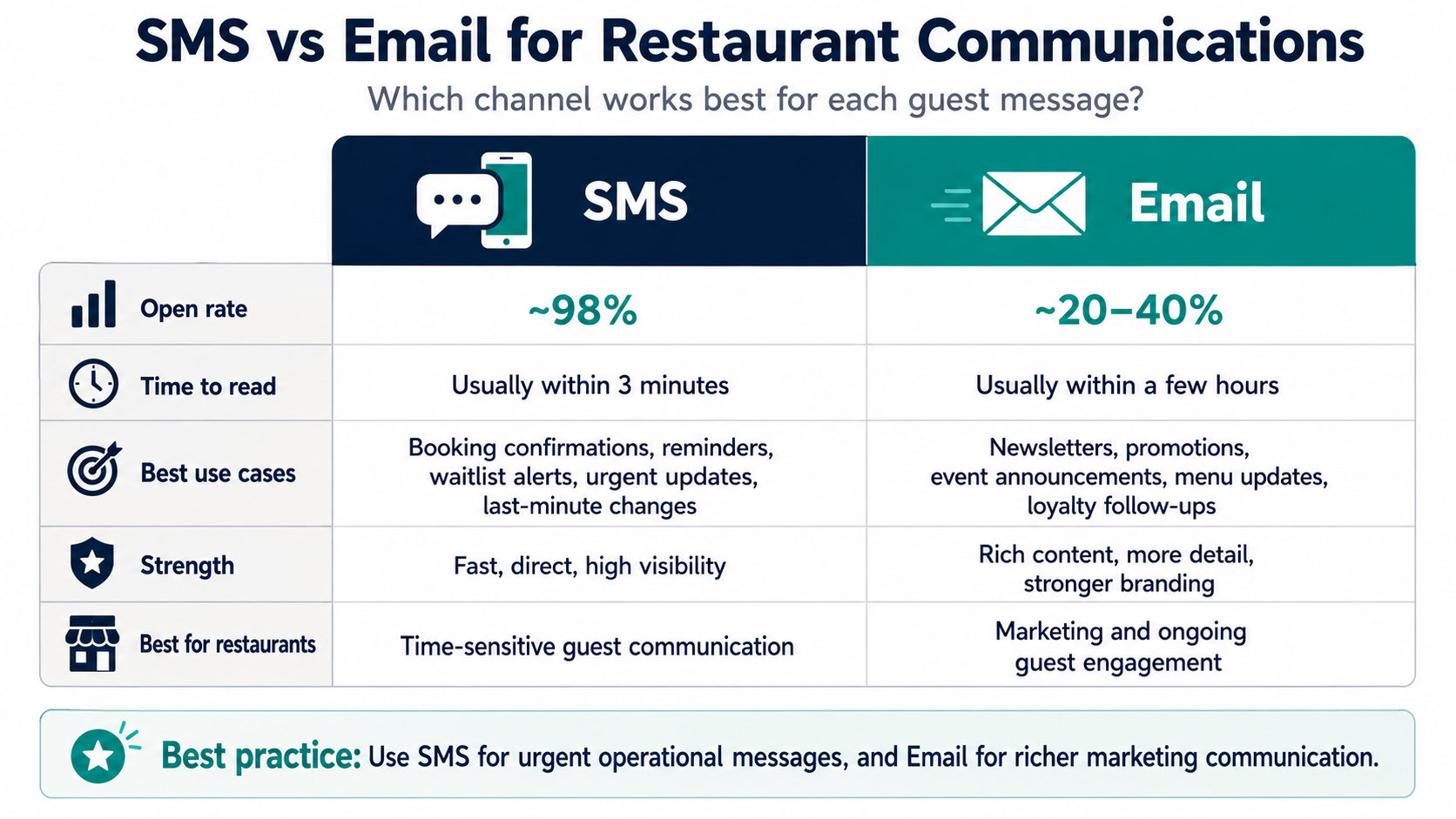
Side-by-side comparison visual:
SMS: Open rate 90%+ | Read within 3 mins: 85% | Best for: confirmations, reminders, urgent fills | Opt-in required: Yes
Email: Open rate 20–30% | Read same day: 45% | Best for: newsletters, longer content, promotions, follow-ups | Opt-in required: Yes
A third column: "Use both. They serve different purposes."
Clean, modern design. No overwhelming data — 5-6 data points max.
Use Case 3: Last-Minute Table Availability
A cancellation lands at 5pm on a Saturday. You have a window table for two going begging at 8pm.
An SMS to opted-in guests who've visited on Saturday evenings before — or who've expressed interest in future availability — can fill that table in minutes.
Template:
Lucky timing — we've just had a table for 2 open up tonight at 8pm. First come, first served: [booking link]. [RestaurantName]
This is one of the highest-converting use cases for restaurant SMS. The combination of scarcity, relevance, and channel speed is almost unbeatable.
Use Case 4: Event and Seasonal Promotions
For guests who are opted in to marketing messages, a timely SMS about an upcoming event, a new menu launch, or a seasonal special can drive direct bookings without any advertising spend.
Template (new menu):
Our new summer menu launches this Thursday. We'd love your thoughts — book your table here: [link]. [RestaurantName]
Template (event):
We're hosting a summer wine tasting on 12 June — just 18 covers. Book before it sells out: [link]. [RestaurantName]
Note: these messages require explicit marketing consent and should be sent no more than twice a month to avoid SMS fatigue.
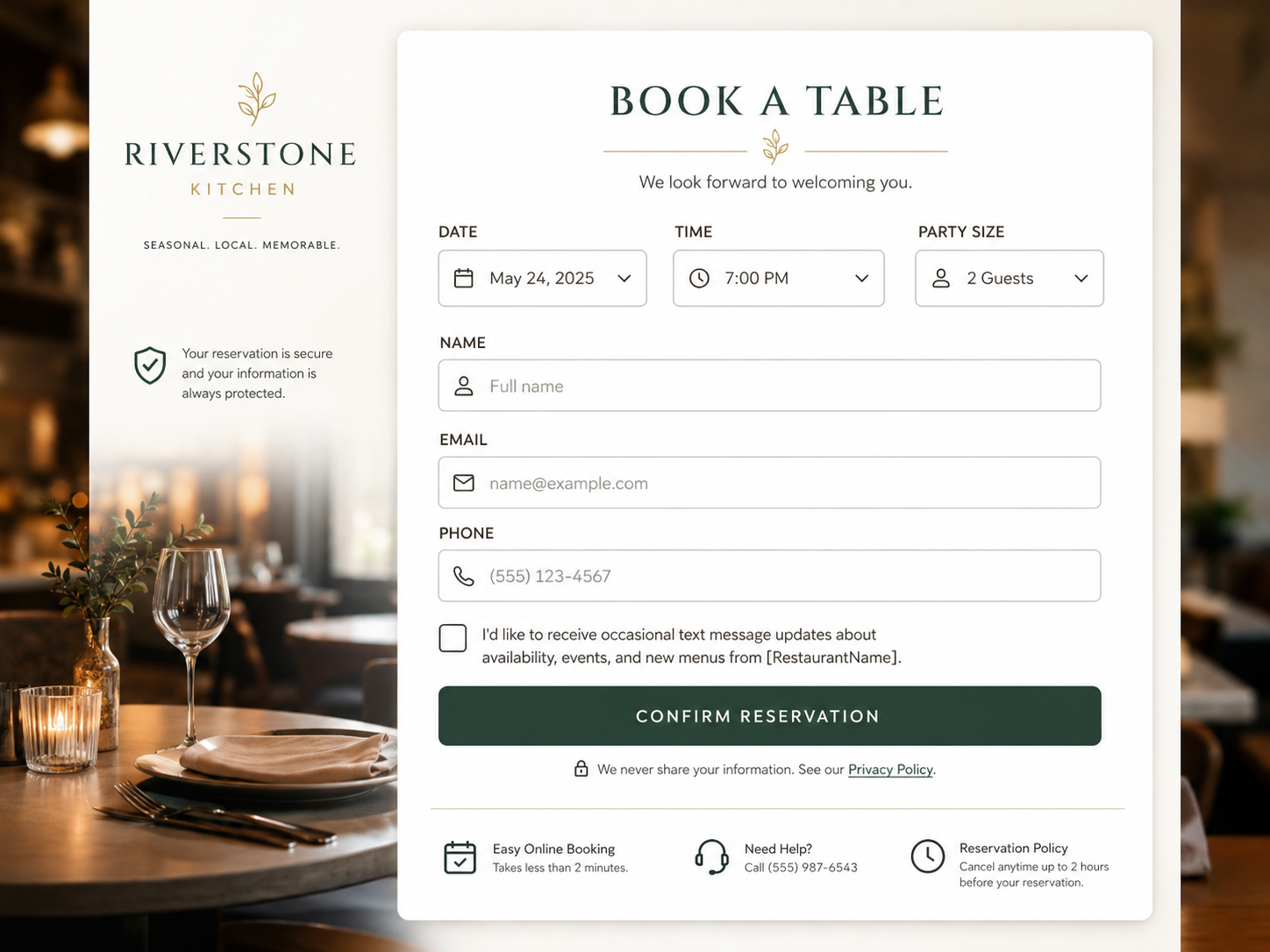
A clean booking form mockup (web or app) showing:
- Standard booking fields (date, time, party size, name, email, phone)
- A checkbox field: ☐ "I'd like to receive occasional text message updates about availability, events, and new menus from [RestaurantName]."
The checkbox should look clean, optional, and trustworthy — not buried in small print.
What Not to Do
- Don't send marketing messages without consent. Full stop.
- Don't send more than 2–3 marketing SMS per month. Fatigue sets in quickly and unsubscribes are hard to reverse.
- Don't use SMS for complex information. New menus, policy changes, long explanations — these belong in email.
- Don't use informal language that doesn't match your brand. If your restaurant is formal, your SMS should reflect that.
How Tablemap Handles SMS
Tablemap uses Twilio for SMS delivery, sending automated booking confirmations and pre-visit reminders for every reservation. The opt-in framework is built into the booking flow, and all outbound messages are tracked against the guest record.