Most restaurant loyalty programmes are either too complicated to set up or too easy for guests to ignore. A stamp card gets lost in a wallet. A branded app requires tech investment and months of development. And most independent restaurants don't have the time, budget, or team to maintain either.
But loyalty — real loyalty, where guests come back because they genuinely want to, not because they're chasing a reward — doesn't require any of that. It requires data, consistency, and a process.
Here's how to build one.
What Loyalty Actually Means for a Restaurant
Before getting into mechanics, it's worth being clear about what we're trying to achieve.
A loyalty programme for a restaurant has one real goal: increasing the number of repeat visits per guest per year. Even moving your average guest from 1.2 visits per year to 2.1 visits per year has a dramatic impact on revenue, without acquiring a single new customer.
The lever isn't points or prizes. It's recognition, personalisation, and timing.
The Loyalty Loop: Four Steps You Already Have the Tools For
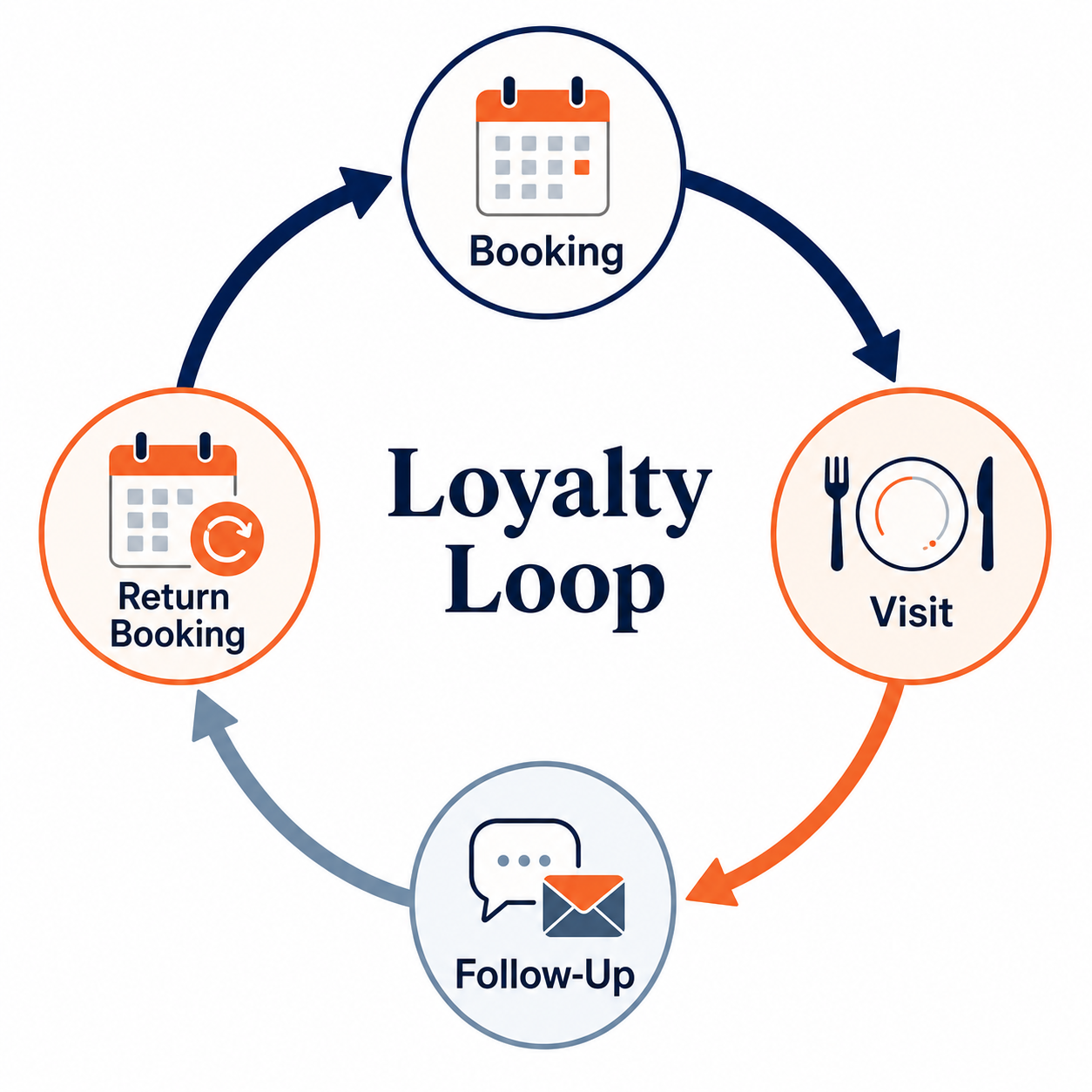
The Loyalty Loop diagram: a circular 4-step flow
Step 1: Booking (guest data captured)
Step 2: Visit (memorable experience delivered)
Step 3: Follow-Up (personalised post-visit message)
Step 4: Return Booking (prompted by relevance, not obligation)
Simple icons for each step, Tablemap brand colours.
Step 1: Capture the Data at Booking
Every reservation is an opportunity to learn something. At a minimum, capture:
- Name and email address
- Party size and occasion (birthday, anniversary, business, etc.)
- Dietary requirements
- How they found you
This isn't just useful for the upcoming visit — it's the foundation of everything that follows.
Step 2: Deliver the Experience
This is the part no software can automate. A guest who is greeted by name, whose birthday is acknowledged, or whose dietary preferences are remembered without being asked again — that guest has a reason to come back. The recognition itself is the loyalty trigger.
Briefing your team before service on notable guests (returning visitors, special occasions, VIP notes) takes five minutes and creates disproportionate impact.
Step 3: Follow Up With Relevance
A follow-up email sent 2–3 hours after a visit is one of the highest-performing touchpoints a restaurant has. Most restaurants don't use it.
Keep it short and personal:
"Hi Sarah — it was great to have you and the team with us last night. We hope the anniversary dinner was everything you hoped for. We'd love to see you again — here's what's coming up next month if anything catches your eye."
Include:
- A genuine thank-you
- A reference to their specific visit if possible
- A soft prompt to book again (no pressure, just visibility)
- A link to leave a Google review
Step 4: Give Them a Reason to Return
The most effective repeat-visit triggers are:
Date-based: If you know a guest celebrated their anniversary with you, a message the following October saying "Last year you joined us for your anniversary — we'd love to welcome you back this year" converts at a remarkable rate.
Event-based: New menu launches, seasonal menus, chef's table evenings, themed nights — these are all reasons to reach back out to past guests who match the profile.
Quiet period incentives: A mid-week message to guests who typically visit on weekends, offering early access to your new autumn menu on a Tuesday, fills quiet covers without discounting broadly.
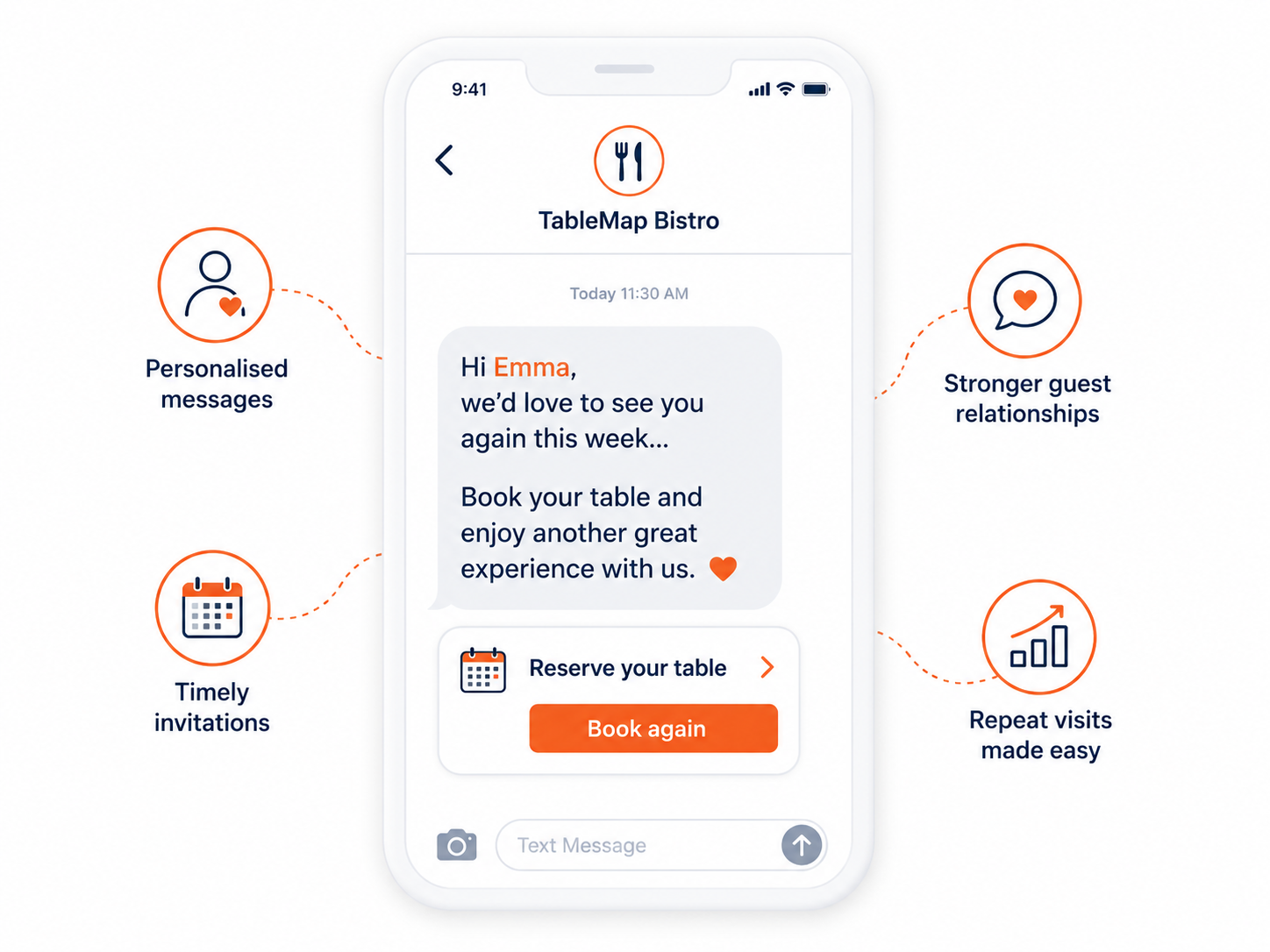
A clean smartphone mockup showing an SMS or email:
"Hi James — we loved having you with us last night for Sophie's birthday. If you're planning another celebration, we'd love to make it just as special. Reply to this message or book directly: [link]"
Keep the design simple, clean, professional. No discount or offer needed.
What You Don't Need
You don't need:
- A points system
- A branded app
- A loyalty card
- A complicated tiered rewards structure
- Any technology beyond your reservation system and a simple email tool
The restaurants that generate the most repeat visits are not running complex programmes. They're running consistent ones. A reliable post-visit follow-up, sent every time, to every guest, personalised to their visit — that compounds.
How Tablemap Supports This
Tablemap captures guest data at the point of booking, tracks visit history, and automates post-visit follow-up emails. You can set the follow-up once and it runs for every completed reservation — no manual effort required.
Every returning guest is flagged, so your front-of-house team can brief before service. That briefing is the moment a transaction becomes a relationship.